A digital transformation initiative usually starts small: a CRM, a content platform or a cloud application. Then the integration backlog arrives. Engineers are asked to connect legacy systems, SaaS tools, databases and internal workflows.. Soon they are spending more time on plumbing than on the product itself. This is exactly the problem ITV, the UKs commercial television network faced as it pursued a company-wide Digital Transformation Integration initiative and it turned to SnapLogic Integration to solve it without expanding its engineering headcount.
The Digital Transformation Challenge ITV Was Solving
According to SnapLogics published ITV case study ITVs Global Distribution division handles a content catalogue that includes more than 46,000 hours of programming sold around the world. The Global Distribution Sales team needed one accurate view of catalogue data, rights information and campaign details inside Salesforce. For five years ITV’s earlier integration tool managed two integrations. The reason was simple: the small Salesforce admin team did not have integration skills. They could not depend on consultants for every change. This is a pattern in any company-wide Digital Transformation Integration effort. The vision is always bigger than the plumbing budget.
Why Integration Becomes a Hidden Product-Team Tax
Every time a connector, transformation, retry and monitoring rule is built from scratch engineering capacity slowly disappears. When the source systems change maintenance becomes bigger. Product backlogs fight with plumbing tasks. A few specialists can read the code. The real question, for any Enterprise Application Integration plan is not whether integrations need engineering. It is whether each Integration must be built from scratch or whether a platform can take care of the parts.
What ITV Connected With SnapLogic
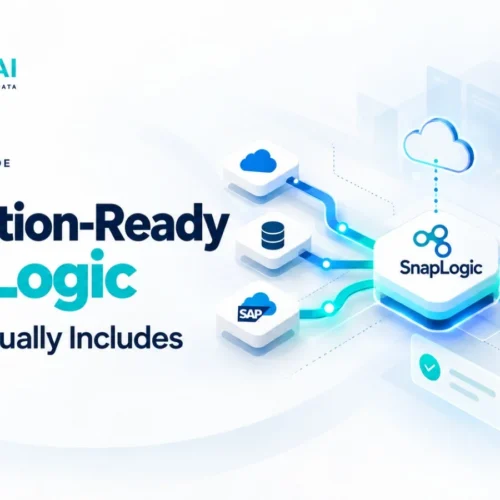
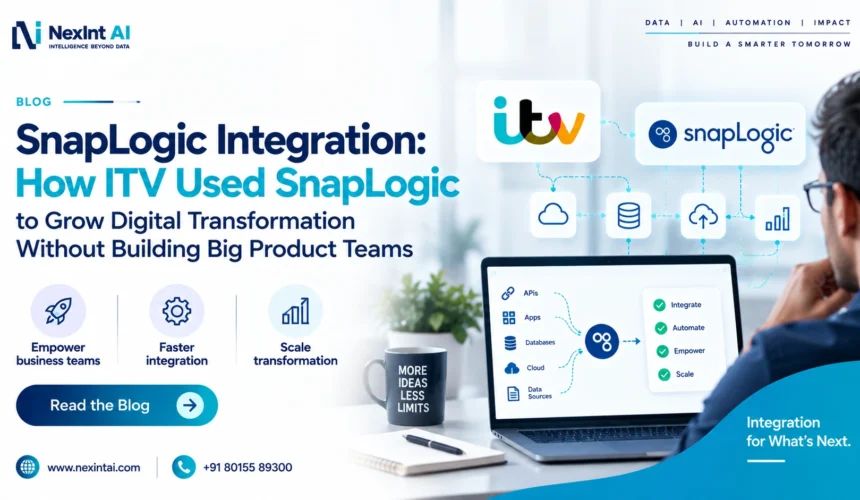
Once ITVs central ERP team had already adopted SnapLogic for legacy modernization, Phil Maguire’s Salesforce team rebuilt its existing integrations using SnapLogic Integration in three days per the case study. The rebuilt pipelines automatically. Updated catalogue data daily from ITVs License & Rights management system through SQL Server into Salesforce. Giving sales staff near real-time visibility into which licenses and rights had been sold. The team also connected campaign management data through SQL Server to Salesforce so sales could track advertising sold across channels, for forecasting and later linked the core content catalogue and fulfilment tooling to Salesforce well.
What ITVs “Secret Weapon” Comment Really Means
Phil Maguire ITVs Application Service Delivery Manager described SnapLogic as the company’s ” weapon ” explaining that his team could deliver and scale the company’s Digital Transformation Integration agenda without using massive product teams. The lesson is not about headcount reduction. SnapLogics own customer page makes no claim. It’s about a team gaining the confidence and self-service tooling to build increasingly sophisticated integrations without waiting on scarce specialist engineers.
A Practical Reference Architecture
Inspired by but not the same as ITV’s setup a practical pattern looks like this: the core record systems such as CRM, rights management, campaign systems and databases sit at the bottom. An integration platform connects everything, changes data as needed and coordinates tasks. Business apps such as Salesforce use the data. A governance layer controls who can see what watches performance and reuses proven designs. This structure is what keeps Enterprise Application Integration stable when it grows large or becomes a maze of fragile point‑to‑point scripts.
Build vs Buy: A Balanced Framework
Build custom software when the logic is core intellectual property, when it differentiates the product, or when performance needs are highly specialized. Reach for SnapLogic Integration or a comparable platform when connectivity is repeatable, when common SaaS systems need to talk to each other, or when the organization needs faster delivery and centralized governance. Most mature technology and media organizations land on a hybrid: custom engineering where it creates advantage, and a shared Enterprise Application Integration layer for everything else.
What the ITV Results Show
According to SnapLogics published numbers the rebuilt integrations gave more than 90 Global Distribution sales users access to real-time data. One main integration was completed in three days and automation made the sales and fulfillment process faster. As the team became more confident, Salesforce integrated. Something the team did not have before. Took less than six weeks to create, showing that the Digital Transformation Integration capability was growing instead of being a single project.
A Practical Playbook for Media and Technology Companies
1) Look at which integrations keep using up engineering time. Find the ones that come up again and again.
2) Split off the connectivity tasks from the work that actually makes the product stand out.
3) Identify the systems in use. CRM, content platforms, rights databases, finance tools. And understand how they fit together.
4) Set rules for how common systems connect. Use the ways to handle authentication, logging and errors across the board.
5) Decide clearly who owns each integration. Who builds it, who gives approval and who watches over it.
This kind of structure is what keeps Enterprise Application Integration strong. It doesn’t matter if the push comes from a CRM, a move, to a different content platform or a big company-wide change. The same discipline applies.
How NexInt AI Solutions Can Help
NexInt AI Solutions was not involved in ITV’s project, but the underlying lesson applies broadly: protect engineering capacity for what actually differentiates the business. NexInt helps media, SaaS, and technology companies design the data engineering foundations, pipelines, and platform strategy behind a scalable SnapLogic Integration or comparable iPaaS rollout from AI-ready data solutions to AI product development that sits on top of clean, integrated data. The goal is never “just install a platform” — it’s designing the systems, integration layer, governance, and operating model together to support real Digital Transformation Integration and Enterprise Application Integration outcomes.
Frequently Asked Questions
01.
How did ITV use SnapLogic?
02.
Why did ITV call SnapLogic its " weapon"?
03.
Does using an integration platform eliminate product developers?
04.
Can mid-size media companies apply the approach?
05.
What should businesses create on their own?
Conclusion
ITV’s experience proves that digital transformation does not mean building every system connection from scratch. The best approach is to choose what to build and what to buy. This way engineering teams can focus on the parts that truly set the company apart. All the rest can be managed through a controlled integration platform. Media companies, SaaS firms and technology businesses in Chennai, Tamil Nadu and, across India that are struggling with integration backlogs are encouraged to reach out to NexInt AI Solutions . They can help design an integration architecture and operating model that grows with the business. Learn more on the NexInt blog.